
Highlights:
- As streaming services become a larger part of onboard Wi-Fi usage, airlines need to know where, when and why the passenger experience degrades.
- Streaming traffic responds to network conditions differently from web traffic. Standard network metrics alone do not show what passengers actually experience on screen.
- Visibility into streaming performance by resolution, flight, route and aircraft helps airlines manage today’s experience and plan for what comes next.
Free Wi-Fi is expanding across airline fleets, loyalty programs and sponsored access models. That changes how passengers use the onboard network. More passengers connect, stay connected longer, and stream more often. Quvia’s Streaming Quality of Experience (QoE) score gives airlines a way to measure what that shift means at the passenger experience level.
On the ground, video already accounts for the largest share of internet traffic. One recent analysis found that people download an average of 5.6GB of video every day. As more airlines expand free Wi-Fi, streaming will account for a larger share of onboard demand, too.
When streaming quality drops, the impact on passengers is easy to feel but hard to diagnose. A low NPS or complaint about "bad Wi-Fi" tells an airline something went wrong, but not where, when, or why. That gap is compounded on the technical side: capacity, coverage and link conditions change constantly, and standard network metrics rarely show how those changes affected the passenger experience on a specific flight.
Airlines need data that connects streaming experience to network performance, so they can identify issues faster, understand their impact and take the right action. As free Wi-Fi expands and more passengers stream, the number of flights where that visibility matters grows.
Streaming vs. Web QoE
Most IFC providers use network monitoring tools that report the same metrics: latency, throughput and packet loss. Those numbers matter, but they don't tell you what a passenger experiences when they press play.
Streaming and web browsing respond to network conditions in different ways. Web browsing is highly sensitive to latency. High round-trip times make pages feel slow because each page load depends on a sequence of requests and responses.
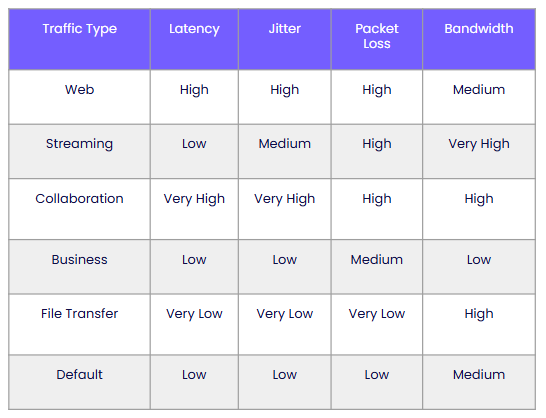
Streaming behaves differently. Once playback is established, the experience depends heavily on sustained throughput, buffer health and whether the connection can support the bitrate required for a given resolution. When available bandwidth consistently falls below what a resolution requires, adaptive bitrate streaming adjusts downward. The video may keep playing, but the picture quality drops.
A network that looks healthy on a standard dashboard can still deliver a degraded streaming experience. The passenger sees the difference, but the airline may not have the data to explain it.
Quvia’s Streaming QoE addresses that gap. Rather than reporting network-layer metrics, Streaming QoE generates resolution-specific scores — 360p, 720p and 1080p. Those scores reflect what a passenger would actually see on screen during a given flight, using an independent, real-time measure that is consistent across aircraft, providers and routes.

Why orbit matters, but does not tell the whole story
Aviation connectivity is still predominantly GEO, but that's changing. LEO adoption is accelerating, and a growing number of airlines are already operating mixed configurations across their fleets.
There is an important nuance in that transition. GEO links have higher latency, but streaming can perform well over GEO when sufficient sustained throughput and capacity are available. For video, latency matters most at startup, in responsiveness and in certain live-streaming use cases. Once playback is established, the passenger experience is driven more by whether the stream can maintain the bitrate needed for the selected resolution.
LEO introduces a different performance profile. Lower latency can improve latency-sensitive use cases such as browsing, collaboration tools and real-time applications. For streaming, performance still depends on provider architecture, aircraft configuration, available capacity, route conditions and demand onboard.
That's why visibility matters now. As LEO adoption grows and connectivity configurations vary across aircraft and routes, airlines need to see whether passengers can actually sustain the streaming quality they expect, not just whether the network appears healthy.
Streaming QoE gives airlines resolution-level scores by flight, route and aircraft, creating a consistent baseline for comparing performance as network architectures continue to evolve.
Looking ahead
The IFC landscape is changing across carriers, regions, fleets and providers. Passenger expectations are moving just as quickly. As free Wi-Fi becomes more common, passengers won’t lower their expectations just because the service is free. They’ll judge the experience by what they can do on board.
Streaming is one of the clearest tests of that expectation. Quvia’s Streaming QoE shows whether passengers can stream at the quality they expect across flights, routes, aircraft and providers, helping airlines manage today’s experience and plan for future network demands.
Want to see what Streaming QoE looks like on your fleet? Contact us.


